



What Is Medical Detox?
Medical detox is the first stage of addiction treatment and is designed to help people safely stop using drugs or alcohol under medical supervision. During detox, physicians, nurses, and addiction specialists monitor your physical and emotional health while your body adjusts to the absence of addictive substances. Depending on your needs, treatment may include medications to reduce withdrawal symptoms, IV fluids or nutritional support, regular monitoring of your vital signs, and mental health evaluations. The goal isn’t simply to stop using substances. It’s to make the withdrawal process as safe and comfortable as possible while preparing you for the next stage of recovery.
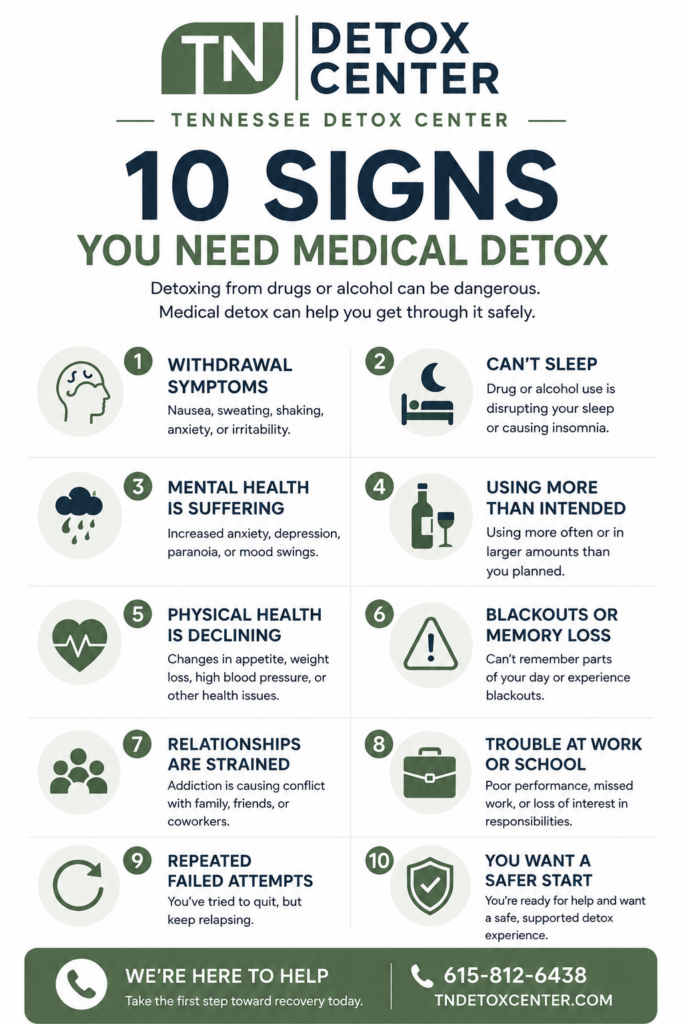
1. You’re Experiencing Withdrawal Symptoms
Withdrawal symptoms often begin within hours after your last drink or drug use, although the exact timeline depends on the substance. Many people experience nausea, vomiting, sweating, shaking, headaches, anxiety, irritability, rapid heart rate, or elevated blood pressure as their bodies begin adjusting. While these symptoms may seem manageable at first, they can quickly become more severe. If you’ve attempted to quit before, you may notice each withdrawal feels worse than the last. This is known as the “kindling effect” and can increase the risk of serious complications. Medical detox provides medications, continuous monitoring, and immediate medical care if your symptoms become dangerous.
2. You Can’t Sleep Without Drugs or Alcohol
Many substances interfere with your body’s natural sleep cycle, making it difficult to fall asleep or stay asleep without continuing to use. You may spend hours awake, experience vivid nightmares, or wake repeatedly throughout the night feeling restless and anxious. Poor sleep can intensify withdrawal symptoms, increase emotional distress, and make recovery feel impossible. Medical detox helps stabilize your body while addressing insomnia and other sleep disturbances in a safe, supportive environment.
3. Your Mental Health Is Getting Worse
Addiction and mental health are closely connected. If you’ve noticed increasing anxiety, depression, panic attacks, mood swings, irritability, or paranoia, substance use may be contributing to these symptoms or masking an underlying mental health condition. Many people entering detox have co-occurring disorders that require professional evaluation. Medical detox programs often include mental health assessments so both the physical and emotional aspects of recovery can be addressed from the very beginning.
4. You’re Using More Than You Planned
One of the clearest signs of addiction is losing control over your substance use. You may find yourself using larger amounts than intended, needing more of the substance to achieve the same effects, or continuing to use despite knowing it’s harming your health, relationships, or career. You might promise yourself you’ll stop after one drink or one pill only to continue using long after you planned. These behaviors often indicate physical dependence, making professional detox the safest way to begin recovery.
5. Your Physical Health Is Declining
Long-term substance use affects nearly every organ in the body. You may begin losing weight, struggling with poor nutrition, feeling constantly exhausted, developing digestive problems, or experiencing frequent illnesses because your immune system has weakened. High blood pressure, chronic pain, and dehydration are also common among people with substance use disorders. Medical detox allows healthcare providers to evaluate your overall health while treating withdrawal symptoms and addressing any underlying medical concerns.
6. You’re Experiencing Blackouts or Memory Loss
Blackouts are a serious warning sign that substance use has begun affecting normal brain function. If you frequently lose hours of time, forget conversations, or can’t remember important events, your risk of accidents, overdose, and serious injury increases significantly. Many people experience blackouts long before recognizing the severity of their addiction. Beginning detox in a medically supervised setting reduces these risks while providing a safe environment where recovery can begin.
7. Addiction Is Damaging Your Relationships
Substance use rarely affects only the individual. It often creates tension within families, damages friendships, and strains relationships with coworkers and employers. You may notice increasing conflict at home, financial stress, broken trust, or a tendency to isolate yourself from the people who care about you most. Seeking medical detox is often the first meaningful step toward rebuilding those relationships and restoring trust with loved ones.
8. You’re Struggling at Work or School
When addiction begins affecting your ability to meet daily responsibilities, it’s often a sign that professional treatment is needed. Missing work, arriving late, struggling to concentrate, declining performance, or losing motivation are all common consequences of substance dependence. Left untreated, these problems can lead to job loss, academic failure, or financial instability. Medical detox helps restore physical and mental stability so you can begin focusing on rebuilding your future.
9. You’ve Tried to Quit Before but Keep Relapsing
Many people attempt to stop using drugs or alcohol several times before seeking professional treatment. Unfortunately, withdrawal symptoms, intense cravings, and fear of becoming sick often drive people back to substance use before they have the chance to recover. Medical detox provides medications, emotional support, and around-the-clock monitoring that make withdrawal more manageable, allowing you to focus on healing instead of simply surviving the next few hours.
10. You Want the Safest Possible Start to Recovery
You don’t have to wait until withdrawal becomes a medical emergency before asking for help. Choosing medical detox means choosing a safer, more comfortable way to begin recovery. Throughout the detox process, you’ll receive continuous medical supervision, evidence-based treatment, and compassionate support from professionals who understand addiction. More importantly, you’ll leave detox with a personalized treatment plan that prepares you for the next stage of recovery.
Who Should Consider Medical Detox?
Medical detox is often recommended for individuals who have developed a physical dependence on alcohol, opioids such as fentanyl or heroin, prescription pain medications, benzodiazepines like Xanax or Klonopin, methamphetamine, or multiple substances used together. It is also appropriate for anyone who has experienced severe withdrawal symptoms, withdrawal seizures, hallucinations, long-term heavy substance use, or co-occurring mental health conditions. Because every person’s health history is different, a professional assessment is the best way to determine whether medical detox is the safest option.
What Happens During Medical Detox?
Many people hesitate to seek treatment because they don’t know what to expect. Upon admission, your medical team completes a comprehensive evaluation that includes your medical history, substance use history, current medications, vital signs, and mental health screening. Throughout detox, physicians and nurses monitor your withdrawal symptoms around the clock while providing medications when appropriate to improve comfort and reduce the risk of complications. Before you leave detox, your treatment team develops a personalized plan for continued care, which may include residential treatment, a partial hospitalization program (PHP), an intensive outpatient program (IOP), counseling, medication-assisted treatment (MAT), or ongoing recovery support.
Recovery Doesn’t End After Detox
Detox is an essential first step, but it is only the beginning of the recovery journey. While detox helps your body recover from physical dependence, long-term sobriety is built through continued treatment that addresses the emotional, behavioral, and psychological causes of addiction. Many people continue their recovery through residential treatment, outpatient therapy, family counseling, relapse prevention planning, medication-assisted treatment when appropriate, and long-term aftercare. Research consistently shows that individuals who continue treatment after detox have significantly better long-term recovery outcomes than those who stop after withdrawal management alone.

Call or message us

Free assessment

Insurance check

Choose a start date

Medically Reviewed By:
Dr. Vahid Osman, M.D.Board-Certified Psychiatrist and Addictionologist
Dr. Vahid Osman is a Board-Certified Psychiatrist and Addictionologist who has extensive experience in skillfully treating patients with mental illness, chemical dependency and developmental disorders. Dr. Osman has trained in Psychiatry in France and in Austin, Texas. Read more.

Clinically Reviewed By:
Josh Sprung, L.C.S.W.Board Certified Clinical Social Worker
Joshua Sprung serves as a Clinical Reviewer at Tennessee Detox Center, bringing a wealth of expertise to ensure exceptional patient care. Read More
- Alcoholics Anonymous. (n.d.). Welcome to AA. Retrieved July 29, 2025, from1 rel=”nofollow external noopener noreferrer”2 https://www.aa.org/
- American Psychological Association. (n.d.). Trauma and PTSD resources. Retrieved July 29, 2025, from https://www.apa.org/topics/ptsd
- Associated Press. (n.d.). AP News. Retrieved July 29, 2025, from1 rel=”nofollow external noopener noreferrer”2 https://apnews.com/
- Crisis Text Line. (n.d.). Get help now. Retrieved July 29, 2025, from https://www.crisistextline.org/
- Harvard Kennedy School – Belfer Center. (n.d.). Programs on international security and diplomacy. Retrieved July 29, 2025, from https://www.belfercenter.org/
- Harvard Program in Refugee Trauma. (n.d.). Training and research for conflict-affected populations. Retrieved July 29, 2025, from https://hprt-cambridge.org/
- International OCD Foundation. (n.d.). Obsessive Compulsive Disorder support and resources. Retrieved July 29, 2025, from 1 rel=”nofollow external noopener noreferrer”2https://iocdf.org/
- International Society for Traumatic Stress Studies. (n.d.). About ISTSS. Retrieved July 29, 2025, from https://www.istss.org/
The Joint Commission – The Gold Seal of Approval® signifies that Tennessee Detox Center meets or exceeds rigorous performance standards in patient care, safety, and quality. It reflects a commitment to continuous improvement and clinical excellence.

LegitScript Certified – Confirms that Tennessee Detox Center operates in full compliance with laws and regulations, and meets high standards for transparency and accountability in addiction treatment marketing.
BBB Accredited – Demonstrates ethical business practices, commitment to customer satisfaction, and a trusted reputation within the community.

Psychology Today Verified – Indicates that Tennessee Detox Center is listed on Psychology Today, a trusted directory for verified mental health providers and treatment centers.
HIPAA Compliant – Ensures all patient health information (PHI) is protected and managed in accordance with strict federal privacy and data security standards.

ASAM Member – Tennessee Detox Center is a proud member of the American Society of Addiction Medicine (ASAM), reflecting a commitment to science-driven and evidence-based treatment standards.

Rutherford County Chamber of Commerce – Membership signifies active participation in the local community and support for regional growth and civic collaboration.
Get Family Support Now
Supporting Families Through Recovery
We understand addiction affects the whole family. Our comprehensive family program helps rebuild trust and restore relationships.
Weekly Family Therapy Sessions
Educational Workshops
Support Groups
Communication Skills Training
Get Family Support Now

Did you know that your insurance plan may cover medical detox?